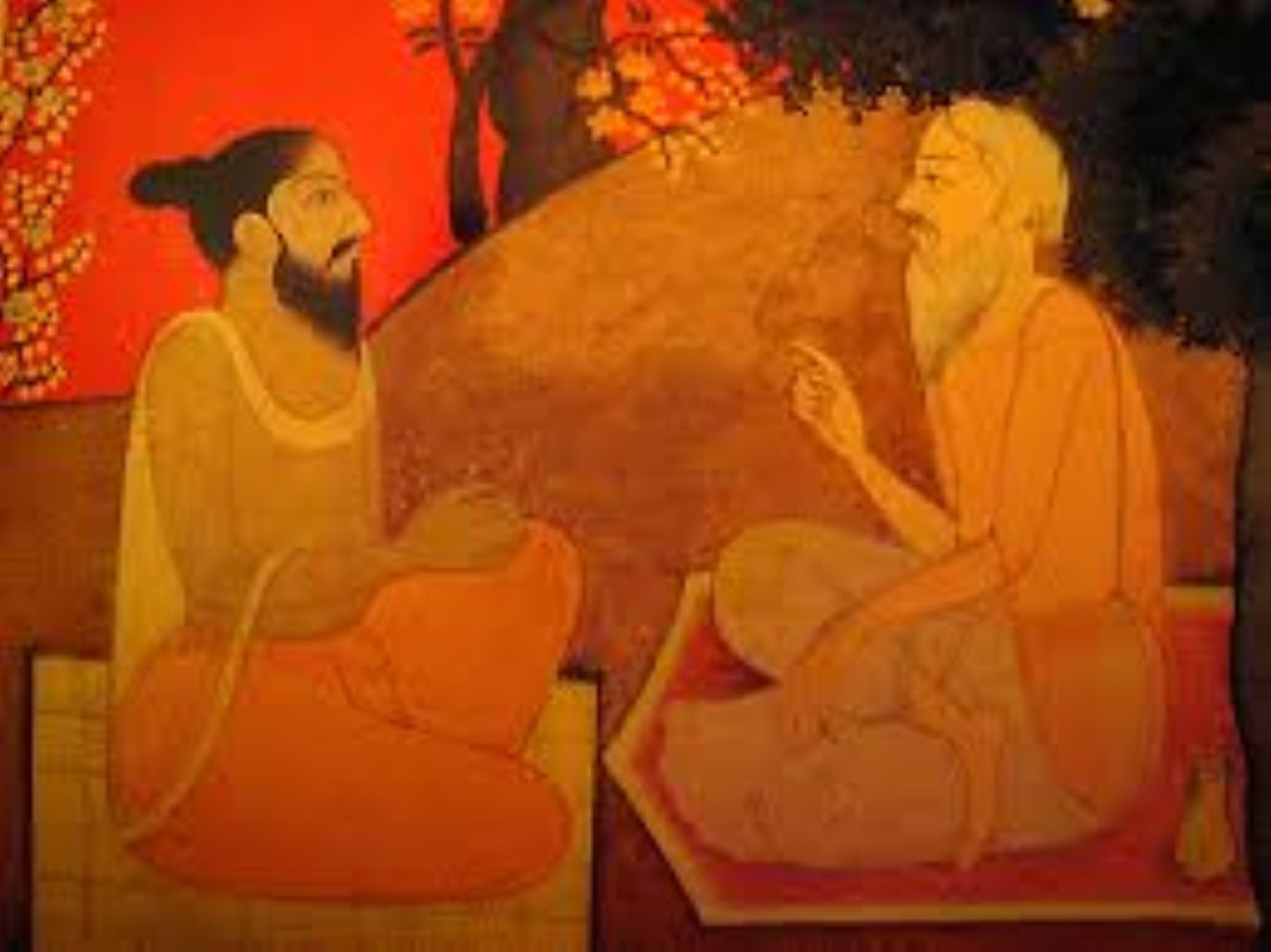
Here Vajashravas who is supposed to donate rich gifts to the priests is a representation of the aspirant who is not fully devoted to his practices while Nachiketas is the perfect example of a spiritual aspirant.
It says he is an unwed boy meaning who has control over his ‘Indriyas’ or sense perception. While the cows here depict our senses, they are impotent or old depicting the present situation in the society wherein people turn towards spirituality when they become old or are tired of the world.
The Upanishad advises against this. Those who have good sense perception and have control over their senses is a true aspirant. Not meaning those who are old can attain the highest state of peace but in a way the Upanishad is telling us that we should have full faith in our practices as well and be as devoted as a five-year-old boy is, like the great Nachiketas.
So, whether young or old it is of utmost importance that we have faith in ourselves as well as our beliefs and spiritual practices. So, for a true aspirant it is important to try practice control over his senses and have his senses under his direction rather being guided by them.
Aliquam sodales donec nec viverra blandit
Ullamcorper commodo posuere neque lobortis
Aenean praesent pretium eu hendrerit ultrices
Diam hac tempus cubilia consectetur senectus
Est nullam himenaeos facilisi lorem congue vehicula